TOP FIVE BEST PIZZA’s IN CHICAGO – Neapolitan

While the Midwest is a far cry from the Italian region widely recognized for inventing pizza, that doesn’t mean Chicagoans can’t turn out a respectable Neapolitan-style pie. To do so, a pizzeria should use only flour, yeast, salt and water for the dough and dress its classic Margherita version with only tomato sauce, fresh mozzarella, basil and olive oil. Most are cooked in superhot (and superexpensive) wood-burning ovens, but as you’ll see below, that’s not always the case. These top four would do any real pizzaiola proud.
1. Coal Fire Pizza
Why is this pizza the best? Because, after repeated visits, we were unable to find faults. The crust has that signature Neapolitan chew we were looking for, but somehow manages to pull off a touch of crispness as well. The sauce is bright, slightly seasoned with salt, pepper and oregano, then spread on in perfect proportion, making for a pizza that’s not too saucy and not too dry. And just like the bubbled peaks of the pizza’s edge, a few spots of the fresh mozz get browned in the coal-fueled oven, while the rest melts into luscious white pools under fresh basil leaves. Bottom line: This is one hell of a pizza. In fact, it gets our vote for best overall pizza in Chicago. 1321 W Grand Ave, 312-226-2625. Average medium one-topping pizza: $13.
2. Spacca Napoli
We give these guys credit for kick-starting the Neapolitan craze in Chicago (true, Pizza D.O.C. was here first, but Spacca makes a better pie) when they opened in February 2006. And we give them even more credit for consistency-the Margherita we had here a week ago was just as good as the one we devoured the first week Spacca was in business. Nicely salted dough made from Caputo “00″ flour (the finest Italian flour, which has a talcum powder-like consistency) is topped with the unseasoned, crushed San Marzano tomatoes typical of Neapolitan pizzas, huge basil leaves and a generous drizzle of a fantastic extra-virgin olive oil. Perhaps its only fault is its slightly wet center, a quality that certain pizza fiends search for but we find distracting. 1769 W Sunnyside Ave, 773-878-2420. Average pizza: $12.
3. Sapore di Napoli
Surprisingly, one of the best Neapolitan pizzas in the city comes from an electric oven. Somehow, chef-owner Alec Yannoulis is able to coax just as much power out of his oven as the wood-and-coal guys, but it’s really the sauce that does it for us. The San Marzano-style tomatoes that come from an Italian-owned family farm in California make for a slightly sweet, acidic sauce. This might seem like a small detail, but add this sauce to fresh buffalo mozz and a salty, chewy crust, and you have an unforgettable pie. 1406 W Belmont Ave, 773-935-1212. Average pizza: $12.
4. Follia
All the charming extras aside-the ever-present owner Bruno, the sceney crowd, the runway-ready clothes draped over dress forms-this upscale Italian spot turns out a respectable pizza. The edges are a touch thin for our taste and the shredded cheese sprinkled on top of the fresh mozz makes for a dairy overload, but the sauce (and the consistently well-cooked crust) saves the day. 953 W Fulton Ave, 312-243-2888. Average pizza: $14.5 MacelloThis newcomer has a few kinks to work out (a near-perfect Margherita one day was followed by one with burned edges the next), but it’s turning out some awfully tasty pizzas only a month out of the gate. We like the slightly salty sauce and the fat pillows of imported fresh mozz, so we’re hopeful once pizzaiola Gino Losacco masters his new oven, this pizza will only get better. 1235 W Lake St, 312-850-9870. Average pizza: $13.
•Courtesy: Time Out Chicago


THE BEST PIZZA AND WINE MATCH

A “pizza wine”
is shop talk for easy-sipping plonk of no particular distinction. It’s relatively cheap, tastes good and works well with casual foods and informal settings. It’s a wine “you wouldn’t feel guilty opening on a Tuesday night,” said Mike Baker, manager of Wine Discount Center in Chicago.Wine for pizza can be deliciously different.
Though it should be affordable enough to down a glass while sprawled on the couch, the wine also should be something to remember even after stuffing the pizza box into the garbage can. Choosing such a wine can take some thought, but that’s probably appropriate given the food you’re pairing it with is pizza.
“This is Chicago, after all; we take our pizza seriously,” said Ray Denton, wine manager at Binny’s Ivanhoe Castle in Chicago.
Pairing wine with Chicago-style deep-dish pizza can be a challenge. Consider the tomato sauce, gutsy toppings, the high collar of crust and a thick blanket of cheese.
Perhaps that is why Todd Hess, wine director for Sam’s Wines & Spirits in Chicago, said he would drink beer with pizza, specifically “an ice cold Pilsner Urquell” from the Czech Republic.
“The tomato is the difficult thing,” he said. “The tomato sauce has a lot of acidity and sugar, which is why beer works so well. A wine has to have reasonably low acidity and lots of fruit. It also has to be heard over the milky proteins of the cheese.”
When asked to name wines that go well with pizza, a number of Chicago-area wine merchants didn’t blink or cock an eyebrow in derision. Indeed, they treated the question as though weighing which wine would work best with foie gras.
A wine from Italy came to mind first for most. Perhaps the adage “Italian wine for Italian foods” was at work here. But the merchants diverged on specific recommendations.
For example, Mike Maracich, co-owner of The Twisted Vine in Orland Park, suggested a “nice light Chianti” that would help cut the tomato sauce.
Hess said a Chianti is “not bad,” but worried the Tuscan wine’s “acidity tends to be made more shrill by the tomato sauce.” For him, reds from the southern Italian region of Apulia, the “heel” of Italy’s boot, work better. They are “ripe, spicy, fruity and delicious,” he said.
Other Italians to consider include inexpensive barberas, rosso di Montalcino from southern Tuscany or a dolcetto d’Alba from Italy’s Piedmont region.
Brenda Fotopoulos, co-owner of Randolph Wine Cellars in Chicago, touts a Sicilian wine, Val Cerasa Etna Rosso, because the “earthier tones” work well with sausage, mushrooms and other toppings.
Outside of Italy, wine merchants point to hearty, assertive reds, including shiraz from Australia and California zinfandel.
“A zinfandel would be my first choice,” Denton said. “Rancho Zabaco Dancing Bull is a terrific value. It’s not super big, but it’s got some fruit and some pepper and some spice.”
Non-traditional pizzas – “white” pies or those with unusual toppings – can call for more unusual choices. Champagnes work well off the salty spark of white pies, Denton said. Baker recommends an Alsatian pinot gris with a veggie pizza or an Austrian gruner veltliner with an artichoke or asparagus pizza. An Italian chardonnay “not quite as buttery or oaky” as a Californian chard works for Maracich of The Twisted Vine. Or, choose an Italian Gavi, a white wine made with the cortese grape, he said.
How much to pay for wine with pizza? Baker suggests looking for bargains in lesser-known wine regions of Italy.
“The further south you go, the more money you save,” he said.
Denton follows a simple rule: “You shouldn’t pay more than what the pizza costs. So, if you’re eating a Tombstone (brand of frozen pizza) you’re looking at $10 or under.”
The top five wines
We conducted an informal tasting of nine wines recommended by area wine merchants for drinking with pizza. Our “palate cleansers” were two deep-dish pies, one sausage and one spinach, from Bella Bacino’s in Chicago. Some of the wines seemed to pair more naturally with the pizza than others.
Ratings key: excellent, very good, good, fair
2001 Rancho Zabaco Dancing Bull Zinfandel ($7). With its fruit backed up by some tannic muscle, this sassy California wine was our favorite. And the cheapest. Though robust, the fruity zin worked well with the pizza’s sauce and the cheese. Very good.
1999 Manzone Dolcetto d’Alba La Serra ($6). Bright, with almost cherry-like aroma (reminding us of cough syrup), this import from Italy’s Piedmont region offered an intensity and a fruity acidity that held up well. Very good.
2001 Falesco Vitiano ($9). Sometimes, it’s the little things that count. With this wine it was the tiniest spark of acid that seemed to work so well with the salt in the pizza. This Umbrian blend of sangiovese, cabernet sauvignon and merlot grapes was dry but with a nice hit of fruit. Good.
2001 Cataldi Madonna Montepulciano d’Abruzzo ($13). This wine from Italy’s Abruzzo region matched the pizza well, perhaps too well. One taster felt the wine “disappeared” behind the fennel of the sausage, while another complained of a bland flavor. Good.
1999 Val Cerasa Etna Rosso ($10). A smoldering Mt. Etna adorns the label of this Sicilian red, whose fiery color in the glass was more vivid than any of the others. Too bad the flavor didn’t have a personality to match. Tasters liked this wine for its balance of fruit and tannin, they just wanted more pizazz. Good.
2001 Torre Quarto Puglia Rosso ($10). Tannins are astringent elements in the wine that can, when judiciously exercised, whip a wine into shape. For some tasters, this southern Italian offered a good flavor for pairing with pizza, but others found the wine’s astringency to be distracting. Good.
2002 Fattoria Laila Rosso Piceno ($12). A blend of montepulciano and sangiovese grapes, this wine from Italy’s Marche region shows a bit too much restraint, although one taster said it was “perfect” with the spinach pizza. Another thought the fruit-forward wine held up well to the sausage. Good.
Courtesy: Arizona Republic
THE BEST PIZZA AND WINE MATCH
A “pizza wine” is shop talk for easy-sipping plonk of no particular distinction. It’s relatively cheap, tastes good and works well with casual foods and informal settings. It’s a wine “you wouldn’t feel guilty opening on a Tuesday night,” said Mike Baker, manager of Wine Discount Center in Chicago.Wine for pizza can be deliciously different.
Though it should be affordable enough to down a glass while sprawled on the couch, the wine also should be something to remember even after stuffing the pizza box into the garbage can. Choosing such a wine can take some thought, but that’s probably appropriate given the food you’re pairing it with is pizza.
“This is Chicago, after all; we take our pizza seriously,” said Ray Denton, wine manager at Binny’s Ivanhoe Castle in Chicago.
Pairing wine with Chicago-style deep-dish pizza can be a challenge. Consider the tomato sauce, gutsy toppings, the high collar of crust and a thick blanket of cheese.
Perhaps that is why Todd Hess, wine director for Sam’s Wines & Spirits in Chicago, said he would drink beer with pizza, specifically “an ice cold Pilsner Urquell” from the Czech Republic.
“The tomato is the difficult thing,” he said. “The tomato sauce has a lot of acidity and sugar, which is why beer works so well. A wine has to have reasonably low acidity and lots of fruit. It also has to be heard over the milky proteins of the cheese.”
When asked to name wines that go well with pizza, a number of Chicago-area wine merchants didn’t blink or cock an eyebrow in derision. Indeed, they treated the question as though weighing which wine would work best with foie gras.
A wine from Italy came to mind first for most. Perhaps the adage “Italian wine for Italian foods” was at work here. But the merchants diverged on specific recommendations.
For example, Mike Maracich, co-owner of The Twisted Vine in Orland Park, suggested a “nice light Chianti” that would help cut the tomato sauce.
Hess said a Chianti is “not bad,” but worried the Tuscan wine’s “acidity tends to be made more shrill by the tomato sauce.” For him, reds from the southern Italian region of Apulia, the “heel” of Italy’s boot, work better. They are “ripe, spicy, fruity and delicious,” he said.
Other Italians to consider include inexpensive barberas, rosso di Montalcino from southern Tuscany or a dolcetto d’Alba from Italy’s Piedmont region.
Brenda Fotopoulos, co-owner of Randolph Wine Cellars in Chicago, touts a Sicilian wine, Val Cerasa Etna Rosso, because the “earthier tones” work well with sausage, mushrooms and other toppings.
Outside of Italy, wine merchants point to hearty, assertive reds, including shiraz from Australia and California zinfandel.
“A zinfandel would be my first choice,” Denton said. “Rancho Zabaco Dancing Bull is a terrific value. It’s not super big, but it’s got some fruit and some pepper and some spice.”
Non-traditional pizzas – “white” pies or those with unusual toppings – can call for more unusual choices. Champagnes work well off the salty spark of white pies, Denton said. Baker recommends an Alsatian pinot gris with a veggie pizza or an Austrian gruner veltliner with an artichoke or asparagus pizza. An Italian chardonnay “not quite as buttery or oaky” as a Californian chard works for Maracich of The Twisted Vine. Or, choose an Italian Gavi, a white wine made with the cortese grape, he said.
How much to pay for wine with pizza? Baker suggests looking for bargains in lesser-known wine regions of Italy.
“The further south you go, the more money you save,” he said.
Denton follows a simple rule: “You shouldn’t pay more than what the pizza costs. So, if you’re eating a Tombstone (brand of frozen pizza) you’re looking at $10 or under.”
The top five wines
We conducted an informal tasting of nine wines recommended by area wine merchants for drinking with pizza. Our “palate cleansers” were two deep-dish pies, one sausage and one spinach, from Bella Bacino’s in Chicago. Some of the wines seemed to pair more naturally with the pizza than others.
Ratings key: excellent, very good, good, fair
2001 Rancho Zabaco Dancing Bull Zinfandel ($7). With its fruit backed up by some tannic muscle, this sassy California wine was our favorite. And the cheapest. Though robust, the fruity zin worked well with the pizza’s sauce and the cheese. Very good.
1999 Manzone Dolcetto d’Alba La Serra ($6). Bright, with almost cherry-like aroma (reminding us of cough syrup), this import from Italy’s Piedmont region offered an intensity and a fruity acidity that held up well. Very good.
2001 Falesco Vitiano ($9). Sometimes, it’s the little things that count. With this wine it was the tiniest spark of acid that seemed to work so well with the salt in the pizza. This Umbrian blend of sangiovese, cabernet sauvignon and merlot grapes was dry but with a nice hit of fruit. Good.
2001 Cataldi Madonna Montepulciano d’Abruzzo ($13). This wine from Italy’s Abruzzo region matched the pizza well, perhaps too well. One taster felt the wine “disappeared” behind the fennel of the sausage, while another complained of a bland flavor. Good.
1999 Val Cerasa Etna Rosso ($10). A smoldering Mt. Etna adorns the label of this Sicilian red, whose fiery color in the glass was more vivid than any of the others. Too bad the flavor didn’t have a personality to match. Tasters liked this wine for its balance of fruit and tannin, they just wanted more pizazz. Good.
2001 Torre Quarto Puglia Rosso ($10). Tannins are astringent elements in the wine that can, when judiciously exercised, whip a wine into shape. For some tasters, this southern Italian offered a good flavor for pairing with pizza, but others found the wine’s astringency to be distracting. Good.
2002 Fattoria Laila Rosso Piceno ($12). A blend of montepulciano and sangiovese grapes, this wine from Italy’s Marche region shows a bit too much restraint, although one taster said it was “perfect” with the spinach pizza. Another thought the fruit-forward wine held up well to the sausage. Good.
Courtesy: Arizona Republic
POPS for Champagne in Chicago
 “Come quickly, I am tasting the stars!”
Dom Perignon, at the moment I discovered champagne.
It was a day to celebrate love. Allan, Brenna and I had attended our friend Qadree’s wedding. After the touching ceremony, there was time for a little something before the suburban reception. On Brenna’s recommendation, we popped into Pops for Champagne.
Brenna and I had a glass of light effervescent Ruinard Rose. The sun was streaming in and hitting those dancing bubbles. I did not envision how entertaining it would be to watch those bubbles. It was a cirque du soleil performance! Allan ordered a full bodied glass of red “Chateau Jura-Plaisance 2000 Montagne St Emilion.” I actually did not remember that, but wrote it down on the menu I took with me! But a sip told me that it’s definitely okay to be a wine drinker at Pops. If you are in the mood for beer, champagne cocktails (Bellini anyone?), Sake or Cognac – Pops can accommodate.
QUOTE ON THE POPS NAPKIN
“I only drink Champagne…when I’m happy and when I’m sad. Sometimes I drink it when I’m alone. When I have company I consider it obligatory. I trifle with it if I am not hungry and drink it when I am. Otherwise, I never touch it…unless I’m thirsty.” Lily Bollinger “Quotation from Daily Mail” 17th of October 1961
Executive chef Andre Christopher has gone to great lengths to create a tantalizing menu of light fare to accompany any flute of the bubbly. We reviewed the chef’s summer menu. Savory choices include something from the raw bar (Kobe style Beef Carpaccio, Kumamoto Oysters or Tuna Ceviche with avocado, mango and cilantro to name a few.) On the recommendation of our “very personable” bartender, we tried the Spicy Tuna Roll with cucumber, shallot and wasabi mayo. This was a party for my mouth! I am sure they had a live tuna in the kitchen carved up and pared with fresh wasabi. I am not a fan of chopsticks (I don’t want to have to work to eat), so I ignored that option. The tuna plate was nicely presented and was just enough food to balance our drinks.
At Pops, you can also choose from a selection of bar plates (edamame, marcona almonds, or marinated olives.) Their small plates selection includes King Crab Roll, Scallop Risotto, Asparagus Tempura or Baked Goat Cheese to name a few. Move on and add a few cheese selections – some more than a little eclectic. Choices include Bucherolle goat’s milk cheese from France, Blueberry Stilton from the UK, or Chatham Hudson Valley Camembert from New York, actually.
If your sweet tooth has been activated – try Strawberries and Chocolate, Vanilla-Sour Cream Cheese Cake or a Turtle Brownie Torte with candied orange, caramel sauce and pineapple.
As with Nomi – I think Pops is a great place to embark on or kindle romance. If you and your date like Jazz – they offer live jazz five nights a week starting at 9 pm. There is a modest cover and no reservations are taken for the jazz club.
So pop in for a little bubbly, tap your foot and have a nibble.

BELINI
The Bellini cocktail is as refreshing as it is simple. And while a Bellini cocktail takes longer than the average cocktail to create, the results of a carefully followed frozen Bellini recipe far outweigh the work involved.
As a mixed drink, the Bellini is one of the more docile you’ll find. Yet docility and blandness should not be confused, as the flavor and aroma of fresh peaches in a Bellini cocktail put the senses into overdrive.
INGREDIENTS
4 oz prosecco (Italian sparkling wine)
1 oz simple syrup
4 white peaches
SERVING INSTRUCTIONS
Peel and puree the white peaches; mix nectar with simple syrup. Strain through coarse cheesecloth; refrigerate until chilled. Pour 1 ounce of puree into a frosted champagne flute; top with prosecco. Serve the Bellini cocktail in a flute glass. Garnish with lemon twist.
Recipe courtesy of BAR TV
Are you a Chicago Sake lover?

There's a meet up group for you:
Sake Meet Up
Sake [sah-kay]
WHAT is it? Considered Japan’s national drink, sake is made by inoculating white rice with a special mould (Aspergillus oryzae), mixing it with pure water, and allowing it to ferment. It’s a process more similar to beer-making than to wine-making, but sake is nevertheless usually translated as “rice wine.” Also like beer, sake is best drunk young; according to Shizuo Tsuji, author of Japanese Cooking: A Simple Art (Kodansha), experts recommend drinking sake at three months of age.
The best sakes are almost always served cold and they’re categorized by the degree to which the rice is polished before it’s fermented, from a delicate and complex Daiginjo to a pure, full-bodied Junmai. A sure sign of sake’s growing popularity outside of Japan? Esteemed wine glass company Riedel now sells a special stemless glass specifically created for serving premium sake.
Courtesy: Beard Bites….James Beard Foundation
aigredoux and Sticky Toffee Pudding

THE COOKING GODDESS DOES AIGRE DOUX
By: Laura Hansen
“Ask not what you can do for your country, ask what’s for lunch.”
Orson Welles, actor, director (1915-1985)
My friend Allan had been bragging to me about Aigre Doux for a few months and I was ready to give it a try. Nestled corner of Kinzie and Franklin – a bakery (that was empty of pastry) greets you upon entering. At Aigre (sour) Doux (sweet), the ambience is minimalist, open and injects hints of simple elegance. Lined with Brazilian cherry wood and soft lighting, viewing the dining area – I rarely notice the wait staff buzzing about.
The husband and wife duo of Executive Chef Mohammad Islam and Pastry Chef Malika Ameen created their culinary magic at places like the Ritz Carleton/Chicago and Chateau Marmont in Los Angeles before launching Aigre Doux in early 2007.
The offerings kick up the culinary adventure, but also have classical roots. The French influence certainly is present (Steak Frites, Haricot Vert Soup), but infused with some contemporary American flair (Buffalo Ricotta & Corn Ravioli).

The appetizer choices are robust – ranging from traditional faire like Caesar salad, to ahi tuna or a roasted beet salad with fresh mozzarella and candied lemon. There are some pizza choices as well – ranging from a simple Greek offering with lamb, olives and feta to a tuna with wasabi cream and shisho.. We settled on the poached shrimp salad, with herbed butter lettuce, avocado and a tart champagne vinaigrette. The shrimp was luscious (although the serving was only two for each of us – I could have easily feasted on more) – the magic was certainly in the mysterious shrimp poaching liquid.
Although our waiter highly recommended the Grilled Chicken sandwich with avocado and herbed goat cheese – the chicken was dry, and I could find greens, but no goat cheese. The clear winner was Allan’s pan seared halibut – a beautiful piece of fish rolled in a heat infused rub with a splash of tomato vinaigrette. The fingerling potato accompaniment was a nice addition – sautéed baby moist delights.
Kudos to pastry chef Malika Ameen for her sticky toffee pudding offering. I’ve been pining for a sampling of sticky toffee pudding ever since it was under consideration as a new potential flavor for Hagen Dazs. It was served warm, with a dollop of Devonshire cream sorbet and citrus segments. I’m certain the clean plate club wins every time with whimsical dessert offerings such as Crème Fraiche Cheesecake and a malt infused custard with a hazelnut Kit Kat.
Sticky toffee pudding
Ingredients
8 ounces dates, finely chopped (about 1 1/4 cups packed)
1 cup boiling water
1/2 cup (1 stick) unsalted butter, room temperature
1 cup (packed) golden brown sugar
4 large eggs
1 3/4 cups self-rising flour
2 tablespoons instant coffee granules
1 teaspoon baking soda
Powdered sugar
whipped cream
Caramel Sauce
Preparation
Preheat oven to 350°F. Butter 9-inch-diameter spring form pan. Line bottom of pan with parchment paper; butter parchment. Place chopped dates in small bowl. Pour 1 cup boiling water over dates and let cool, about 1 hour.
Using electric mixer, beat butter and sugar in large bowl to blend. Add 2 eggs, 1 at a time, beating well after each addition. Add half of flour and beat to blend. Add remaining 2 eggs, 1 at a time, beating to blend after each addition. Add remaining flour and beat until blended. Combine instant coffee and baking soda in small bowl. Pour into date mixture, stirring to dissolve coffee granules. Add date mixture to batter and beat to blend. Pour batter into prepared pan. Place on rimmed baking sheet and bake until tester inserted into center comes out clean, about 1 hour.
Cool pudding until just warm. Unmold; sprinkle with powdered sugar. Cut into wedges and serve with whipped cream and Caramel Sauce.
Makes 12 servings
Courtesy: Epicurious
BYOB IN CHICAGO
 Chicago is a BYOB city.
There are more than 400 restaurants without a liquor license that allow you to bring wine (or beer if you must). Usually BYOB is offered because a restuarant is waiting for their liquor license to be approved or perhaps they cannot get a license because of a restrictive ordinance. For the consumer, you have the luxury of enjoying great food and are able to save big on the bar bill!
Always keep in mind, the restaurant is still providing you a service. They usually open the wine for you and some will chill the wine in a bucket at your table. It is proper etiquette to calculate extra for the tip, since they have provided you with extra service. Some restaurants may also charge a small corkage fee.
There is a great book (and site) out called BYOB CHICAGO, by Jean Iversen, which covers about 150 Chicago establishments. Some that I know of…..
* Always Thai
* Art of Pizza, The
* Bhabi’s Kitchen
* Cafe Suron
* Cathedral Cafe
* Coast Sushi
* Cozy Noodles & Rice
* Cucina di Donatella, La
* Dharma Garden Thai
* F212
* Green Tea
* Hama Matsu
* Hemas
* Kanok Sushi
* Katy’s Dumpling House
* Los Nopales
* Mr. Thai * Nookies
* Nuevo Leon
* Orange
* Palmito
* Parrot Cage
* Rhythm & Spice
* Rique’s Regional Mexican Food
* Sol de Mexico
* South
* Speakeasy SupperClub
* Tango Sur
* Terragusto
* Think Cafe
* Tre Kronor
* Wholly Frijolies Mexican Grill
Michael Snell
for Best of the Best Dining Chicago
Vosges Chocolates And Swedish Bakery Breads

WHO DOESN’T LOVE CHOCOLATE ?
AND WHO DOESN’T
LOVE FRESH BAKED BREAD?
When it comes to chocolate, Chicago based Vosges Haut-Chocolat is on a mission is to create a luxury chocolate experience rooted in a sensory journey, bringing about awareness to indigenous cultures through the exploration of spices, herbs, roots, flowers, fruits, nuts, chocolate and the obscure. Vosges explores the many cultures, artists and theories of the world’s people through the medium of chocolate. Owner/Chocolatier Katrina Markoff personally chooses every spice, flower and chocolate brought into the Vosges Chicago kitchen.
DID YOU KNOW? Most truffles average $2.50-$3.00 each. But if you’re lucky, you can snag a box of 16 truffles for $16, every once in a while! Vosges has strict quality control but accidents happen! And a truffle may get bruised a little here or dented a little there, a nut may fall off the top…when they get 16 of those that don’t make the best of the best, they are boxed up and sold at a reduced rate. So of course, available quanities vary. Vosges has two locations here in town –
Chicago – Downtown 520 N. Michigan Avenue 312.644.9450
Chicago – Lincoln Park 951 W. Armitage 773.296.9866
(Also available in Las Vegas at Caesars Palace, in SOHO in New York City, and select Neiman Marcus stores).
Located in Andersonville, Swedish Bakery began in the late 1920’s. That’s some history! Traditional Swedish products continue to be made, as well as an infusion of other European and old fashioned American items are produced at this neighborhood institution. Pies, cakes, cookies, breads! It’s all here. Fresh baked warm bread melts in my mouth! But you can also catch some great deals here on day-old and two day-old breads, coffee cakes, and sweet rolls. Bread gets reduced to just $1 and sweet rolls and coffee cakes can be reduced from 25% – 50% off!
Swedish Bakery 5348 N. Clark, Andersonville, 773-561-8919
Michael Snell
Derrick Sorles
Best of the Best Dining Chicago
SWIRLZ CUPCAKES LINCOLN PARK

THE COOKING GODDESS DIPS INTO CUPCAKES!
Lincoln Park is known for great places to eat, eclectic and unique stores and beautiful two and three flat buildings on shady tree lined streets. Now, it’s also known for sumptuous cupcakes!
Just off Lincoln Avenue on Belden, Swirlz Cupcakes is owned by Four Unlikely Friends who turned a love of the tasty treats into a flourishing business. Cupcakes are now “hot” all across the country – due in part to boomer nostalgia and the insatiable human need for a daily treat.
Pastry Chef Jeremy Sher’s passion for cupcake perfection is reflected in the use of top shelf ingredients such as Euro style butter, premium French chocolate and Italian buttercream frosting.
There’s not only love and beauty in the cupcakes – they also make their way across the street to Children’s Memorial Hospital. These treats always put a smile on the faces of children and their parents – a welcome oasis from daily adversity. The cupcakes are made fresh every day, so any unsold cakes also are donated to Deborah’s Women’s Shelter, the 18th District Fire Department, and other local non-profit organizations. This community good will attracts more customers! There’s such loyalty to “the goodness” of Swirlz that people often board flights at O’Hare with a box or two of cupcake comfort in hand.
One of the unique aspects of Swirlz is their Gluten Free (GF) offerings. For those with this allergy, the search for food products that taste good becomes an obsessive quest. Customers come from as far as Wisconsin and Iowa to buy the flavorful treats. They are rice-flour based, moist and cakey. The GF cupcakes are available every day (with a different flavor each day). GF Flavors include Chocolate Grasshopper Mint, Lemon Twist and Chocolate Peanut Butter.
Swirlz has reduced sugar cake offerings every day, flavors include chocolate on Vanilla, Chinese 5-Spice and Lemon on Chocolate – a “Weight Watchers friendly” cupcake that will only cost you 4.5 – 5.5 of your daily points!
My friend Julie and I sampled the red velvet, carrot, chocolate, vanilla and the “surprise” cupcake of the day, mango. My personal favorites were the vanilla, carrot and red velvet. What’s interesting about these cupcakes is that the overall taste of the two key components is not “overwhelmed” by sweetness, as many cupcakes can be. The cake itself is rich, moist and dense. The two fabulous frostings: buttercream and the cream cheese based are silky smooth. The depth of the quality ingredients is apparent by taking the time to really taste each frosting. One is tempted to lick off all the frosting and go for more. The cream cheese frosting (which I confess is traditionally not my favorite) – is a perfect accompaniment to both the carrot and red velvet offerings.- It is blended with whipped Italian Buttercream!
Swirlz can produce cupcakes for catered events, weddings and showers. Traditional size cupcakes are $3 each, with mini’s priced at $1. Minis are made only for special events. Swirlz even delivers!
Chef Jeremy Sher was kind enough to share this recipe with us:
Swirlz Lemon Curd
Yield: approx. 1 cup
Egg yolks 3
Whole eggs 1
Sugar 4.5 oz (½ cup + 1 T)
Fresh squeezed lemon juiceLemon zest 3 oz (2-3 lemons)From 1 lemon
Unsalted butter, melted 2 oz (4 T)
1.Whisk all ingredients together in a glass or stainless bowl just until combined.
2.Make a double boiler by placing bowl over a pot of simmering water (do not let boil) and stir occasionally for approximately 20-30 minutes until the mixture starts to thicken. It should coat the back of a spoon evenly when tested.
3.Strain and let cool (discard the zest).
4.Store in fridge for up to 1 week. Use on top of cupcakes, inside layer cakes or even on toast or pancakes in the morning. Enjoy!
BY LAURA HANSEN – THE COOKING GODDESS
Best of the Best Dining in Chicago
BEST WINE BAR IN CHICAGO – POPS!

WHATS THE BEST WINE BAR IN CHICAGO?
I think everyone would have to agree, POPS FOR CHAMPAGNE is the best in town!
After spending nearly 25 years in the subdued, elegant and charming spot in Lakeview, owners Tom and Linda Verhey decided to bring the well known lounge to River North. Pops is the nation’s most acclaimed champagne bar and Chicago’s most elegant live music club. And now they are in a spacious bi-level space which is the historic Tree Studios on the corner of State and Ohio.
The new space has everything! Champagne bar, adjacent retail space called Pops Shop(selling an eclectic selection of champagnes and sparkling wines from around the world, as well as unique service and gift items), raw bar, charming outdoor spaces including a courtyard and sidewalk cafe, plus a hip downstairs haven for music lovers. The downstairs space has low ceilings with great sound and a modern feeling.

Andre Christopher, a former chef from Japonais, is in the kitchen here now. Even though most people come for the amazing Champagne selections (125 Champagnes and sparkling wines), the tastings are pretty delightful as well! Contemporary small plates and desserts are mouth-watering. Selections include items from their state of the art raw bar, a caviar selection, hot and cold antipasti, cheeses and unique desserts made in-house.
Whether you stop in for lunch, an after work drink, tasting event , or stop by for the jazz, Pops is the place!
601 N. State St., 312-266-7677
Derrick Sorles
for Best of the Best Dining in Chicago
The Signature Room Pays It Forward and Delivers an Amazing Food and Wine Experience

The Signature Room at the 95th
and The Signature Lounge on 96th
offer sweeping views of the city sitting atop The John Hancock Center Building at 875 North Michigan Avenue. Matter of fact, they offer the highest public view from the building as The Observatory is actually on the 94th floor!
The Signature Room’s elegant art-deco interior, contemporary American fare and exceptional wine cellar make it an intimate dinner destination spot for both locals and tourists.
The owners, Rick Roman and Nick Pyknis, believe strongly in giving back to the community and launched their Charity of the Month Program in 1993.

Each month, The Signature Room at the 95th offers the “Signature Selection” menu, an a-la-carte “specials” dinner menu which regularly features 2-3 selections under appetizers, soups/salads, entrées and desserts. The designated non-profit organization of the month receives 10% of the sales from this menu, which is offered throughout the sponsored month.
The staff has a chance to meet with a representative from the respective organization at each month’s kickoff to learn about their program’s mission and ask questions so they will be able to share information with guests. Since the inception of the program, The Signature Room at the 95th has donated over $500,000 to 160 non-profit organizations in the Chicagoland area.
January: Pathways Center – Chicago
February: Variety – The Children’s Charity of Illinois
March: Emergency Fund -Chicago
April: Chicago Children’s Advocacy Center
May: Kids Fight Cancer- Arlington Heights
June: Help Ease Local Poverty – Chicago
July: Kids In Danger – Chicago
August: American Lung Association of Metropolitan Chicago
September: The Better Boys Foundation- Chicago
October: AIDSCare -Chicago
November: The Salvation Army – Chicago
December: The 100% Foundation- Lake Villa, IL

Local non-profits are encouraged to submit an application to be considered. Each year, applications are accepted through June 15 and then reviewed by the restaurant’s executive committee in the order applications were received, for consideration for the following program year. At the end of July, notifications of selection and non-selection are sent out to all applying organizations.
Then in the following January, The Signature Room at the 95th hosts the “Table for Twelve” Reception, to kick-off the yearly program and honor all upcoming, 12 non-for-profit groups. All profits from the reception go directly to the charity of the month organizations. Thank you Rick Roman and Nick Pyknis for your socially responsible efforts! We’ll hope you serve as inspiration to others to create sustainable venues for paying it forward in their communities.
Derrick Sorles Best of the Best Dining Chicago
So Who Really Has The Best Pizza in Chicago?

OMG!
Lets face it – You could write a whole blog about PIZZA!
Ask 100 people is Chicago what their favorite pizza is and you would probably get 100 different answers!
First, a brief history;
Chicago-style pizza is a very specific variety of pizza. Pizza is traditionally considered to be a type of hearth cake such as focaccia. The Chicago-style pizza shares more in common with a casserole, such as lasagna. True Chicago-style pizza, a unique deep dish variety, features a buttery crust-cheese -chunky tomato sauce construction. While stuffed, pan and thin-crust style pizzas are also served in Chicagoland, it is for the deep-dish style that Chicago pizza is most famous.
 The Chicago-style “deep-dish” pizza was invented at Pizzeria Uno in Chicago in 1943, reportedly by Uno’s founder Ike Sewell. The pizza begins with a simple, thin layer of dough (made with olive oil and often dusted with cornmeal) that’s laid into a deep round pan and pulled up the sides, then pan-baked before the toppings are added to give it greater spring. The crust is lined with meats and/or vegetables such as Italian sausage (a Chicago staple), onions and peppers, either under or mixed with mozzarella cheese. On the usual pizza, about a pound of cheese is used. Then a layer of seasoned crushed tomatoes goes on top and the pizza is baked to completion.
Rocco Palese, who founded Nancy’s in 1974, generally gets the credit for Stuffed pizza. He based his creation on his mother’s recipe for scarciedda, an Italian Easter pie. Other pizzarias that make stuffed pizzas include Edwardo’s and Giordano’s. Stuffed pizzas are often even taller than deep-dish pizzas, but otherwise, it can be hard to see the difference until you cut into it. A stuffed pizza generally has much higher topping density than any other type of pizza. As with deep-dish pizza, a thin layer of dough forms a bowl in a high-sided pan and the toppings and cheese are added. Then, an additional layer of dough goes on top and is pressed to the sides of the bottom crust.
 PAN PIZZA in Chicago is similar to the deep-dish style, and baked in a similar deep-sided pan, but its crust is quite thick — a cross between the buttery crisp crust and foccacia. Toppings sometimes go on top, as with thin-crust pizza, rather than under the sauce.
Now, as for who has the best? We looked at serveral polls taken over the last 2 years. These were the popular choices that the public voted on, in no particular order:
Lou Malnati’s Pizzeria – 439 N Wells St, Chicago
Whether you crave deep dish or thin crust, this comfortable, casual pizza joint serves up some of the best in town.
Giordano’s – 730 N Rush St, Chicago
Local favorite serves up stuffed and thin-crust pizzas within a stone’s throw of the Mag Mile.

Gino’s East – 633 N Wells St, Chicago
Graffiti-covered walls and to-die-for deep dish draw crowds of families and tourists to this classic pizzeria.
Pizzeria Uno - 29 E Ohio St, Chicago
Traditional deep-dish pizza is worth the wait.
Bricks Chicago 1909 N Lincoln Ave, Chicago/Lincoln Park
Gourmet pizzas are the order of the day at Bricks. This pizzeria has a host of pizzas sporting interesting names. Try the “Painful.”
Edwardo’s Natural Pizza – 1321 E 57th St, Chicago/ Hyde Park
this edition of the popular pizza chain is highly regarded for its gourmet pizza pies, stuffed pizzas, and calzones.
Spacca Napoli – 1769 W. Sunnyside, Chicago / Uptown
This spacious Neapolitan-style pizzeria is just what Chicago needs: A place where you can stroll in, order up a glass of vino, and in less than 10 minutes be presented with a bubbling, slightly charred, basil-infused pizza straight out of a wood-burning oven. Ahhh, Italy. TELL US YOUR FAVORITE!
Chicago Brides Agree on the Sweetest Wedding Cake

If your like most brides in Chicago planning a summer wedding, hopefully you have already secured your cake or are tasting now!
Taste is subjective, I know.
However, when many people agree something is great,
it pretty much is great!

Enter Sarah’s Pastries & Cakes.
11 Oak Street, Chicago.
Confectioner SARAH LEVY, the 25-year old sweet queen who is probably best known for her custom-made-candy but lately, more and more brides are turning to her for their wedding cakes.

The master of the Kitchen-Aid mixer says,”They are the ultimate example of the joy that sweets can bring to someone’s life.” Sarah, who has been written up in several magazines and the topic of a couple broadcast news programs, uses luscious fillings that range from traditional chocolate mousse to pumpkin creme brulee. And if you haven’t got a cake yet for your big day, don’t fret; while two weeks notice is preferred, I am told SOMETIMES, Levy can whip up something fabulous in a couple days!
It’s all about FRESH and high quality ingredients! “We roast fresh pecans to use in our batters, fillings are made with real Madigascar Vanilla beans and carmel that is freshly made in the shop, as opposed to using carmel flavored syrups.” said Levy. Wedding cakes range $500-$700, and they’ll serve 100 people.
Best of the Best Dining Chicago
Michael Snell
Wine Knowledge – A Corked Wine and a Cooked Wine

I was at a well known Chicago restaurant the other night and the wine I ordered was corked.
As soon as I put my nose to the glass it smelled musty. Then I tasted it - and yes, indeed it was bad.
When I brought it to the waiter’s attention, he didn’t even know what I was talking about. Neither did 2 guests at my table. They whole reason you “taste” the wine is to check the quality – not to see if you like the flavor or not. So I thought I would present a little educational item.
A corked wine is a wine that has been bottled with a cork that is contaminated with TCA (2,4,6-Trichloroanisole). TCA contamination usually comes from corks but can also come from barrels, other cooperage or even, apparently, from wood within the cellar including walls or beams.
The wine industry estimates that as many as 3% to 7% of all wines have TCA contamination at levels that can be detected by consumers. Because most people are not trained to recognize the smell and taste of TCA, only a very small fraction of these bad bottles are ever returned to stores or sent back at a restaurant.
Even a very tiny amount of TCA in a wine can ruin a good wine. When TCA is present in quantities high enough to be evident to a person, it comes across as ‘musty’ aromas and flavors.- TCA does not pose a health risk (at least in the levels found in wines). It just imparts the aromas and flavors that are objectionable when found in sufficient quantity.
A great deal of work continues in the cork industry as well as at wineries to develop methods to eliminate corked wine. We are seeing more and more synthetic corks and a return also to corkless, screw-off caps.
If you get a ‘corked’ wine, you should return it to the store from which it was purchased or refuse it at the restaurant. Most wineries completely stand behind their wines and will work to ensure customer satisfaction. Do make sure that you check the wine when it is opened and before it is poured around the table. Wineries and stores are less likely to accept the return of an empty bottle with your claim that it was bad! The tasting ritual of a freshly opened bottle of wine developed over the years to allow the host to check and make sure that bad (corked) wine was not poured for guests.
Another potential problem with wines is a cooked wine. Poor storage conditions lead to cooked wine. Wine that lays in the loading bay on hot summers day, or spends days sweltering in the back of a truck or a cargo bay of a ship, is at risk. I see it frequently with wines from Chile. Usually, the cork will expand with a poorly handled wine. Never buy a bottle where the top of the cork doesn’t sit flush with the mouth of the bottle. Also, there won’t be any freshness to the fruit aromas or flavors.

Because they don't know better.
You can't tell much from smelling a cork.
You can FEEL the cork, to see if it's moist.
You can READ the cork, to make sure that the year and name on the cork matches that on the label.
I read in a book once,
"if the cork smells like nice wine, it's likely that the wine doesn't smell like cork". WRONG
You will never see a sommelier smell the cork. You may see them smell the opening of the bottle immediately after removing the cork, to check for cork taint. The problem with smelling the cork is, corks, especially those extracted from old vintages, often smell a little strange. After all, it's wood bark that's been wet for years! Just because the cork doesn't smell so great doesn't mean the wine is corked. Smell the wine instead, it's a more reliable method of detecting corked wine.
Derrick Sorles
for Best of the Best Dining in Chicago
TRU – A Best of the Best Chicago Dining Experience

WHIMSY is serious business at TRU Restaurant.
This is an ULTIMATE dining EXPERIENCE!
TRU has been around for the last 15 years. It’s been awarded the Wine Spectator Grand Award and Fodors Choice awards. And remains at the top of the city’s best 3 restaurants, consistently.
The Chefs:
Culinary food artists Rick Tramonto ( a blend of mad scientist and magician) and Gale Gand ( a blend of playful charm and seriously good taste) both pursue to create excellence. And do!
The Food:
Four star Upscale Mediterranean-influenced French food for the serious culinary guest.
Flavor, texture and appearances are all covered here.
Unique creations and surprises create sensory overload.
The best choices include the Prix Fixe 3 courses for $95, or the Chef Tramonto’s Market Collection which is 9 courses for $145.
ALL OF THE FOOD HERE IS AMAZING–Period.
Dessert is breath-taking and heavenly.
P.S. – the Caviar Staircase is quite outstanding.
The Drink:
More than 1,000 wines are featured; two sommeliers, including resident celebrity Scott Tyree, can make recommendations.
The Ambiance:
Whimsical-Minimalistic styling. It’s a “gallery” of mixed mediums and styles.
Contemporary art pieces (among them an original Warhol) adorn stark white walls.
The Service:
Impeccable! Choreographed! Flawless. Elegant. Perfection. Meticulous. Did I say Impeccable?!
You usually have several people waiting on you and it is like orchestrated dance or food-ballet during your 3-hour dining experience.
After Theatre Deal:
Monday-Thursday 9:00 – 10:30 and Friday-Saturday 10:30-11:30 – Stop by TRU for a delicious 3-course
dessert sampling! Only $25!
The entire experience seems like a piece of art itself, right down to the bathroom sink! If you haven’t already, treat yourself and visit TRU.
676 North Saint Clair, (312) 202-0001, reservations required.
By Michael Snell and Derrick Sorles
Best of the Best Dining in Chicago
What is BEST OF THE BEST DINING IN CHICAGO all about?
First, understand that we are not “food critics” – that name implies that we are trying to find something wrong with a dining experience. We are in search of what is right about food in
Chicago. This city is moving fast and it is truly a culinary capital. We want to explore the best of it from opening to old
“count on it” restaurants.
We are passionate cooks and love to eat great food. So, we don’t visit an eatery announced, nor do we look for (or expect) something to go wrong. If a restaurant is not excellent in more than one way (food, continuity of cuisine, service, visual) we won’t write about it. Often, the reviews are about finding “one great dish.”
Also, the site is not just about fine dining in four star restaurants. It’s about good food created and served with love. This means all places have an equal chance!
From $ to $$$$.
One more thing – this is not just a site about dining in Chicago. We interview some culinary characters, support entrepreneurs in the cuisine start ups, and peek around the nooks and crannies of
the food scene here to find the story behind the story. We cover restaurant and food news and happenings all over Chicago!
Bon Appetit!
Feel free to contact us:
773-878-5323
or E-mail
- PLEASE NOTE -
BestoftheBestDiningChicago
is not connected to or
affiliated with the popular
TV show DiningChicago
and their site DiningChicago.com

Subscribe to updates via Email

Subscribe to updates vis RSS

 Subscribe in a reader
(please note -if you were previously subscribed PRIOR to 2011, you need to re-sign up, as the system has changed)
In Memory of Laura Hansen

In Loving Memory of
Laura Hansen
July 26,1959-March 31,2010
In 2006, we became part of a blogging team of experts, with Melissa Giovagnoli. The blogosphere was growing at leaps and bounds and Social Media was exploding. Through Melissa, we met the wonderful Laura Hansen.
My partner and I had launched a few sites already and were on our way to growing a little online publishing empire. We were also doing consulting for clients, who wanted to know what we knew about the Web 2.0, blogging, keyword search and Social Media Networking.
On a cold day in January 2007, while having brunch with Melissa, we came up with the idea of starting a BEST OF series. And the first was Best of
the Best Dining Chicago. We decided between the three of us we could all help contribute to it. But we knew Laura Hansen would have to be involved! Laura was a
foodie and was working on some food projects for tv. She both enjoyed and created amazing food, and was inspired by exceptional wine, cuisine and a memorable
dining experience.
After a few months of launching, we were all so busy with all of our other projects, after contributing about three dozen articles, we took a step back and let Laura take it over, since
she had the most passion for food and dining.
Over the years, Laura developed this great guide to the best Chicago area food and restaurants. She also sourced ethnic cooking ingredients tucked away in small groceries throughout the
Windy City and greater Chicago-land.
In Lauras words,
"Two weaknesses:
dairy, dairy, pasta, pasta
Best Pizza: Thin crust in Venice
Pepsi or Coke?: Water
Foods I Dislike:
Lima Beans, brussel sprouts
Favorite TV Show: Iron Chef
Passionate Hobby:
Painting and Photography
Culinary Addiction: Spices
Cocktails: Chardonnay or Vodka Martini’s with blue cheese olives
Cup half full or empty?
More than half full!
I began experimenting in the kitchen at the age of 7, by trying to emulate mom’s hamburgers. I did not truly “pick up the passion” again until inspiration came in
the form of Jeff Smith, which I viewed weekly on his PBS series “The Frugal Gourmet.” At that point, I really began to understand that cooking and creating food is the best mix of both chemistry and
love. The second significant event was the launch of TV Food Network. A self confessed “Food Network Junkie” – I’ve earned my stripes by incorporating seeds of wisdom from countless hours of
viewing.
Inspired creativity is my culinary viewpoint. Inspiration comes from avocados being on sale. Inspiration comes from making that same chicken soup 20 times until it’s just right. Inspiration comes
from “I have artichokes, what can I do with that? I have traveled extensively in search of outstanding cuisine made with simple, fresh ingredients. I write about the local Chicago culinary scene and
blog about food that’s interesting and occasionally provocative. ” I definitely consider myself passionate about inspired cooking and telling stories about how food makes everything better!”
This site is kept alive,
in Laura's spirit.
Derrick Sorles
Michael Snell
Dining Out For Life April 29th

Dining Chicago.com and TV


Windy City’s guide
to restaurants, nightlife,
shopping and more
with the Food Dude,
David Lissner
Visit them online!
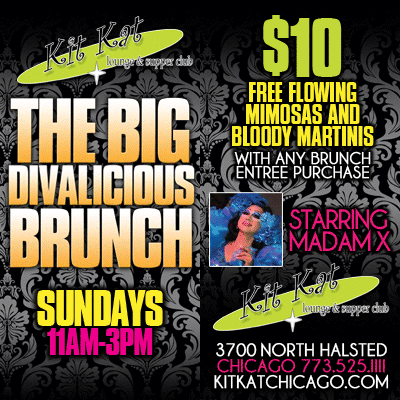
Kit Kat Lounge - Best Martinis Plus Showbar
El Mariachi Tequila Bar and Restaurant
3906 N Broadway
Ph. 773.549.2932
El Mariachi Restaurant-Original
3420 N Broadway
Ph. 773.549.7020
BoJonos Amazing Thin Crust Pizza and the BEST Hot Wings!


Fresh & Healthy Italian Cuisine
4185 N. Clarendon
Chicago, IL 60613
(773) 404-9700
ORDER ONLINE!
Chicago Restaurant Deals and Discounts

Inside Your Chicago




Copyright 2007-2011
 This work is licensed
under a Creative Commons Attribution-Noncommercial-No Derivative Works 3.0 License.